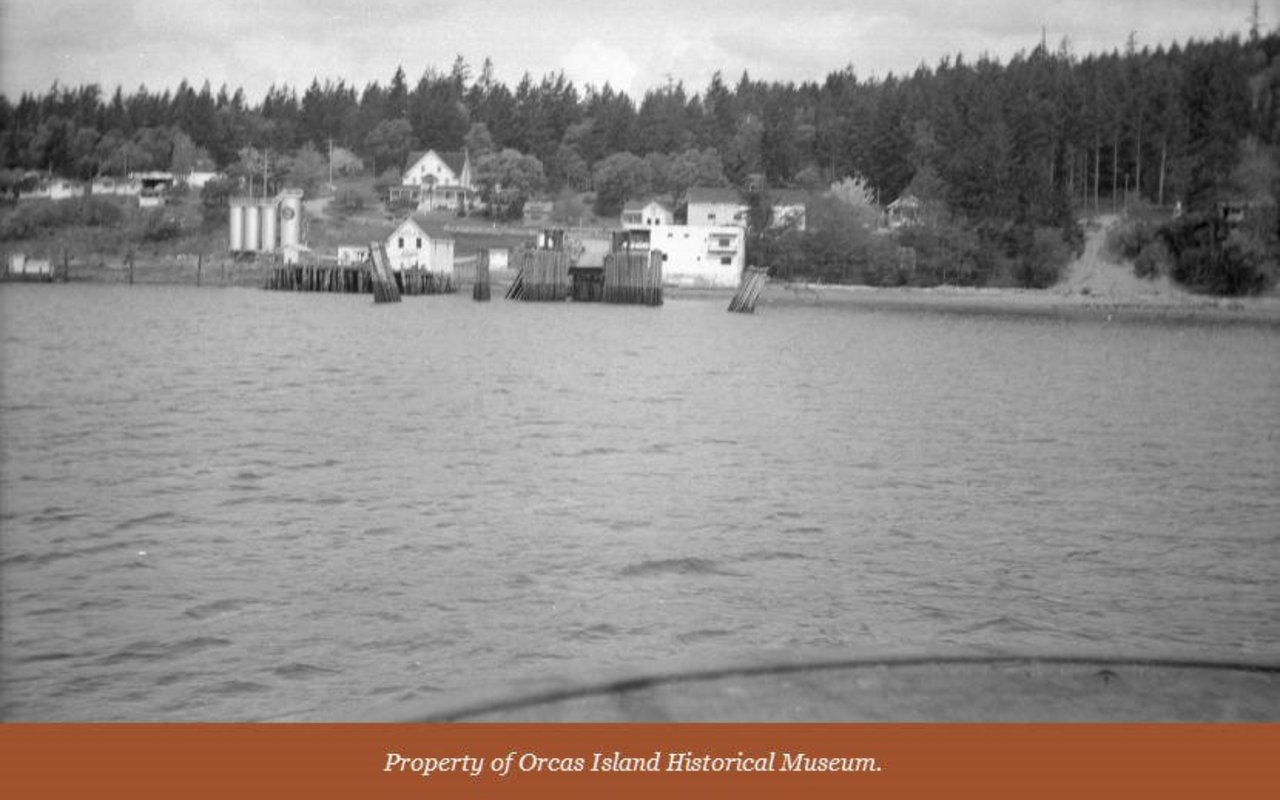
In 1905, in a ten-acre orchard in Olga, one branch on one Gravenstein tree started doing something the other forty-nine trees around it weren't. Instead of the pale green-and-yellow skin every other Gravenstein on the property produced, this single limb put out apples the color of a stop sign. Nobody bred it. Nobody planned it. A bud on that tree had simply mutated, the kind of accident orchardists call a "sport," and for reasons no one has ever fully explained, this particular sport tasted just as good as its parent and looked considerably better on a produce stand.
That accident is the reason Olga has a footnote in American apple history. It is also, it turns out, exactly the kind of thing that is happening again in the same soil this year, under different names.
A Mutant Branch Becomes a National Product
The nurserymen who owned that orchard, operating as Van Sant & Whipple through the Vineland Nurseries Co. out of Clarkston, Washington, moved fast once they saw what they had. They top-grafted 68 trees to the new red strain and, according to their own advertisement in the trade journal Better Fruit, expected to have forty to fifty thousand trees ready for delivery by the following spring. The USDA thought enough of the discovery to send botanical illustrator Deborah Griscom Passmore to paint it for the federal pomological collection in 1909, a watercolor still catalogued today under its origin: Olga, San Juan County, Washington.
The apple became known simply as the Red Gravenstein, and it shipped throughout the islands and well beyond them. What made it valuable wasn't that Olga had discovered a way to grow better apples. It was that someone had noticed a genetic accident before it got pruned away, understood what a grafted cutting could do with it, and had the commercial instinct to multiply it into a product. A tree doesn't create a variety. A person naming and propagating one does.
Why Nobody Ever Cleared These Orchards
Orcas Island's apple industry peaked around 1910 and never really recovered, and the reason has less to do with the Depression than with a dam. Irrigation projects around Yakima in the 1930s opened up hot, dry acreage that could finally produce sweet fruit at a scale the islands never could without hauling water. Commercial apple growing on Orcas simply couldn't compete, and most island farms that survived did it by diversifying rather than expanding their orchards.
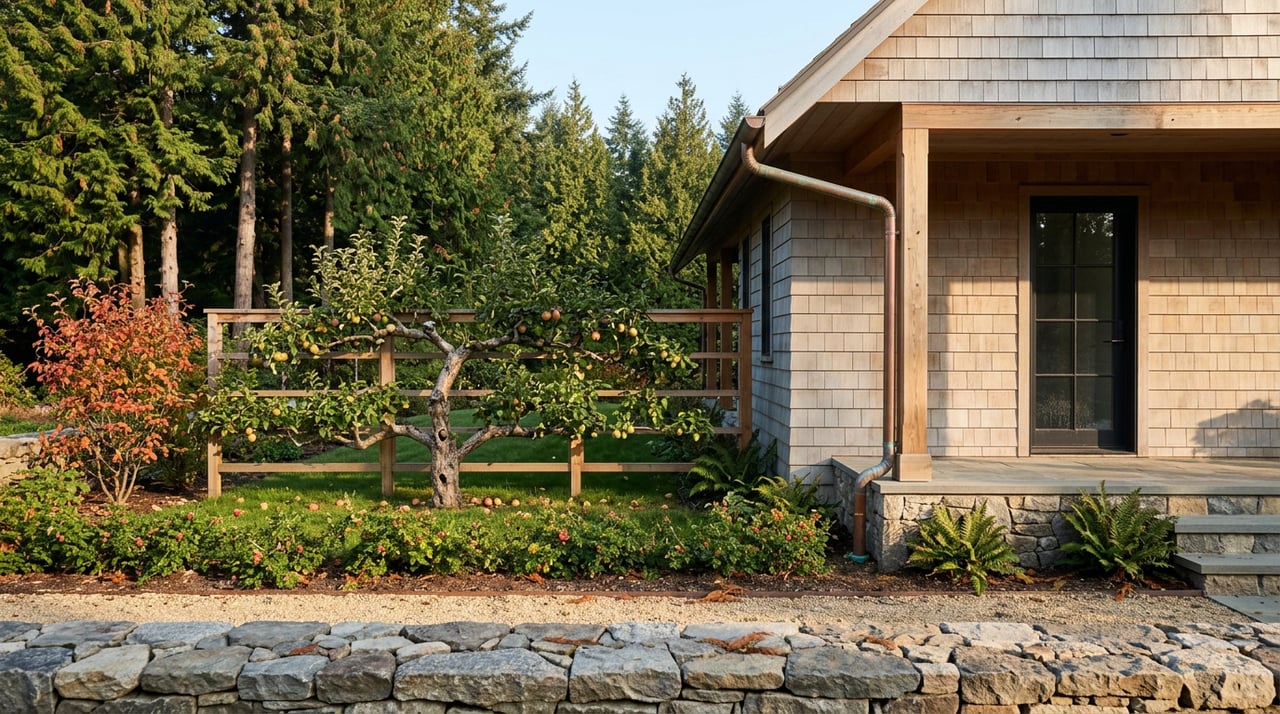
What that decline left behind, though, was something the islands still have and Yakima doesn't: trees nobody bothered to tear out. Because nobody replanted these orchards with modern rootstock chasing higher yields, many of the trees planted between the 1860s and early 1900s are still standing, still producing, mostly ignored. That neglect turned out to be the reason there was still raw material left to look at a century later.
The Same Mechanism, Working Again Right Now
For the past five years, Kwiaht botanist Madrona Murphy has been walking those old orchards with funding from the Orcas Island Community Foundation, mapping and sampling trees that in some cases have gone unnamed for generations. She has traced samples back to varieties that were common on Orcas a hundred years ago and have since fallen out of general memory: Westfield Seek-No-Further, Northern Spy, Golden Russet, the New Jersey-bred King (which turned up in roughly a quarter of the samples Kwiaht sent for testing), and the tough, late-storing Baldwin from Massachusetts.
But the more interesting discoveries aren't the recovered heirlooms. They're the seedlings, which work differently than a sport does. A sport is a mutation on a tree that already exists, a genetic accident on a known parent. A seedling is a brand-new individual, grown from a seed that fell in a ditch, a barnyard, or a pasture after birds or raccoons scattered half-eaten fruit, and cross-pollinated with whatever wild crabapple or nearby orchard tree happened to be blooming at the same time. Nobody planted these trees. They survived anyway, with no irrigation and no pruning, which is exactly what makes them useful now: they are naturally suited to the conditions here in a way that imported commercial varieties aren't.
Three of these seedlings have names this year: Cayou Peach, Eastsound Rose, and Rosalie Red. They'll begin appearing in select island farm stands this autumn. Cayou Peach carries a specific echo. One of the island's oldest documented orchards was planted in the 1860s by Mary Anne Cayou, a Coast Salish homesteader, and her husband Louis, and the name nods directly to that lineage.
Set side by side, the two eras run through almost the same steps.
1905 (Red Gravenstein) | 2026 (Cayou Peach, Eastsound Rose, Rosalie Red) | |
|---|---|---|
What was found | A mutated limb on an existing Gravenstein tree | A wild seedling from natural cross-pollination |
Who noticed | Nurserymen Van Sant & Whipple | Kwiaht botanist Madrona Murphy |
How it multiplied | Grafted onto 68 trees for commercial sale | Grafted onto new rootstock, shared as scionwood |
How it reached people | National trade catalogs and shipping crates | Farm stands, this autumn |
The tools are gentler this time. Nobody's shipping crates east by rail, and Kwiaht plans to hold the registered names in trust for the island rather than sell them off, reinvesting any future returns into local food-security work. But the underlying event is the same one that happened in 1905: something the landscape produced on its own got noticed by someone paying close attention, and got a name because of it.
As Murphy has put it, describing the era that made the original Red Gravenstein possible, this was a place where growers "explored their dream for apples making them rich." A century later, the ambitions are smaller and more communal, but the raw ingredient, an island full of century-old trees quietly doing their own genetic experimenting, hasn't gone anywhere.
Where to Actually Taste This
This isn't a history lesson without a way to participate in it. A few concrete ways to see it play out this fall:
- Farm Tours of the San Juans runs its Orcas Island weekend October 2 through 4, 2026, a week earlier than in past years, with stops that include apple cider pressing alongside the market gardens, sheep and wool demonstrations, and flower fields that make up the rest of the island's working farms.
- Kwiaht holds apple tastings each fall in partnership with the Lopez and Orcas island museums and the San Juan Island Grange, alongside the scionwood exchanges and grafting workshops it runs each spring at the Orcas Island Historical Museum, where cuttings of these same varieties are shared freely with island farmers and gardeners.
- Orcas Isle Cider presses fruit gleaned from old island orchards and feral trees into small-batch ciders at its farm, where the Beaver Den tasting room looks out over a working beaver pond.
- Warm Valley Farm, an Orcas Island orchard dating to the 1890s, has long supplied apples to Orcas Island Distillery for its apple brandy, one more use for fruit that started out as an accident nobody planned for.
None of these varieties are going to show up in a grocery store. That's rather the point. The apples worth tasting on Orcas have always been the ones a nurseryman, a botanist, or a homesteading family happened to notice before anyone else did.
The Next One Is Probably Already Growing
Somewhere on this island right now, in a ditch, a fence line, or a corner of pasture nobody has gotten around to mowing, there is very likely a seedling apple tree that nobody has tasted yet. That was true in 1905, and it is apparently still true in 2026. Olga's real legacy isn't that it grew especially good apples. It's that it kept producing genetic accidents nobody expected, and every so often, someone was paying enough attention to name one.
We spend a lot of time at True North Realty Orcas Island collecting the small, specific stories that make each corner of this island what it is, Olga included. If you're curious about more of what's rooted here, or you're thinking ahead to a future on Orcas yourself, our team is always glad to talk, whether the subject is apples or acreage.