"It's one of those tools you don't know you need until you need it." San Juan County Council member Kari McVeigh said that in September about WSF's medical loading rules, as reported by The Islands' Sounder. Less than two weeks after that report ran, the first weekend of October showed what she meant. The ferry system has written priorities for who boards first, and most of them only help if they were arranged before the line at the Orcas terminal started backing up.
What a reservation actually promises
On Sunday, October 4, travelers at the Anacortes terminal who had no confirmed reservation were told to leave their cars or delay their trip. According to the Sounder's October 5 report, WSF said 23 engine-room employees had called in sick, qualified relief workers had turned down the shifts, and 13 of its 18 ferries were out of service. For Monday, WSF blocked new reservations and changes, waived no-show fees, and told holders of canceled reservations they could look for space on other departures on a first-come, first-served basis.
Having a reservation did not protect everyone. The Sounder's October 12 follow-up described a couple who were turned away Sunday evening even though they had booked, and it pointed to the state rule that allows this. WAC 468-300-700 covers "preferential loading" and lists 22 exceptions to first-come, first-served boarding. When a breakdown or other "service interruption" stops WSF from running its published schedule, the rule lets the agency cancel or move reservations, stop taking new ones, turn away drivers without reservations, and decline to guarantee travel even for people who hold one. The same report noted that WSF reimburses only overcharges or fare discrepancies.
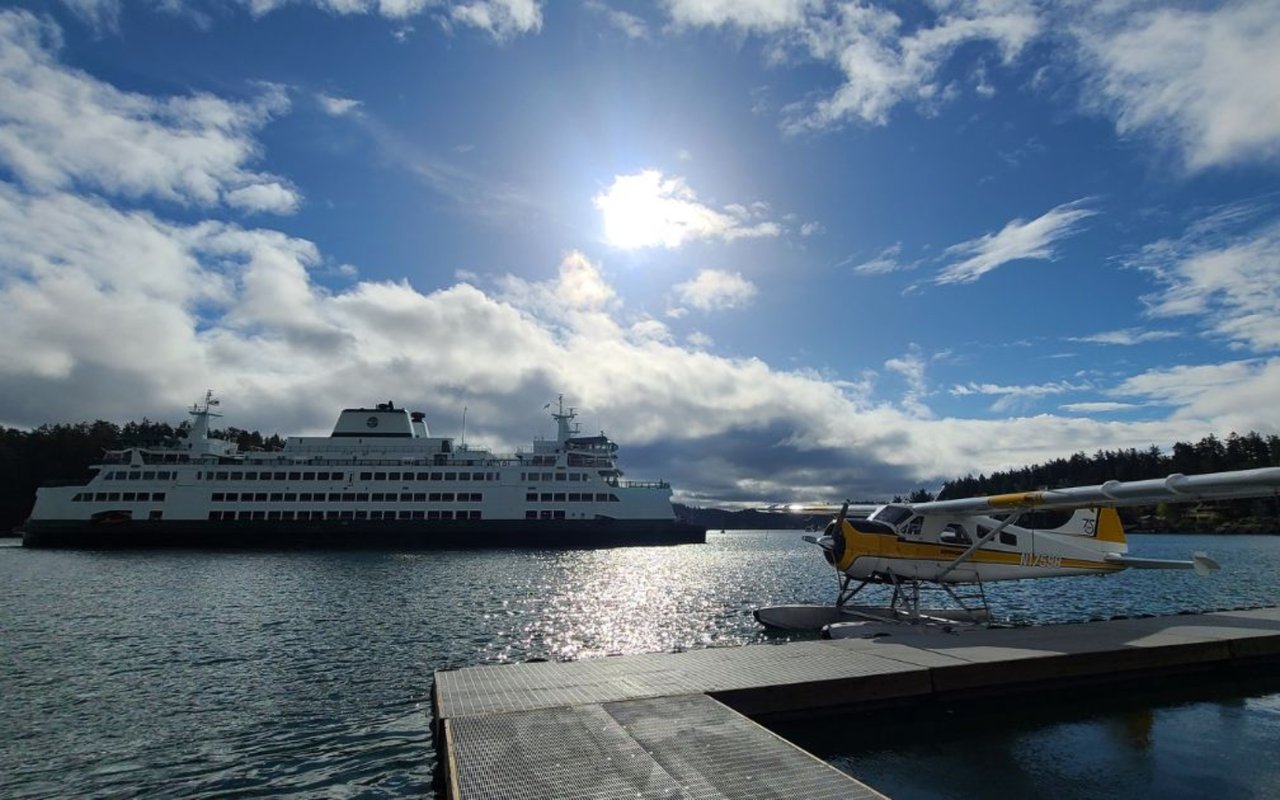
The route kept running during the shortage, with limits. The Council thanked WSF for putting two of its five operating ferries on the Anacortes/San Juan Islands route. WSF also sent the Samish on a 6:15 a.m. all-stops run from Anacortes through Lopez, Shaw, Orcas and Friday Harbor to carry students and inter-island crew. On a disrupted day, the schedule is rebuilt around the trips that must happen, and a reservation becomes one factor in who boards rather than a promise.
"Medical priority" is two separate programs
The same state rule creates two kinds of medical loading, and the San Juan County Ferry Advisory Committee spent part of its September 14 meeting asking WSF to explain the difference in plain language. The committee said riders, and sometimes even first responders, confuse the two in the middle of a crisis. They work very differently.
| Emergency loading | Medical Preferential Load Program | |
|---|---|---|
| Who it is for | A patient traveling in an emergency vehicle | Non-emergency travel where waiting at the dock would pose an undue health risk, such as coming home after surgery |
| Who sets it up | First responders, who call the WSF Operations Center | A licensed health care provider, who applies for the patient |
| Rider paperwork | None | Printed confirmation email plus matching ID |
| What it covers | The emergency vehicle and one family "follow car" | One standard vehicle under 22 feet |
| Boarding | Arranged directly with WSF Operations | The next available sailing, not first-on, first-off |
| Arrival | Handled by responders | 30 minutes before the sailing on the Anacortes/San Juan Islands route |
The follow car is the part families tend not to know about. It is the vehicle that lets a family member travel with a patient being moved by ambulance, and the rider does not apply for it. Responders request it when they call Operations. Tali Teal, WSF's community and legislative liaison, told the committee that breakdowns in the follow-car process are uncommon, according to the Sounder. Committee member Ken Burtness, a retired WSF captain, asked that EMTs, fire chiefs and police chiefs across the county be trained to tell families about the follow-car option. Hadley Rodero, WSF's deputy director of planning, customer and government relations, agreed to pursue it. Families can also confirm with emergency personnel that the WSF Operations Center has been contacted, which is the step the committee itself urged riders to keep in mind.
Committee member David Robison argued for keeping the two programs together in public materials. "I'm in this situation that's medical, and that's how I see it," he said at the meeting, as the Sounder reported. WSF staff had asked him to separate them because the rule governs them differently. Both views hold up in practice. A rider experiences either situation as medical, but only one of the two depends on paperwork filed in advance.
Who can file, and what the program does not do
WSF's Medical Preferential Loading page says the program is for people who can travel but face an undue health risk from waiting at the dock. It is not a way to make an appointment on time when waiting poses no health risk. MDs, RNs, PAs, midwives, and affiliated staff or designated clinic administrators can submit the certification. Physical therapists and chiropractors cannot. The provider files online at wsfmedpref.wsdot.wa.gov, a portal limited to licensed providers and their designated clinic administrators. Providers who need help can call WSF Customer Service at 1-888-808-7977 or 206-464-6400.
The 30-minute arrival rule is firm. WSF says medical-preference customers on this route who arrive after the gate closes cannot board. If a post-surgery trip home is on the calendar, the application has to go in before the trip, and the printed confirmation needs to be in the car.
This is general information and not legal or medical advice. For your own situation, check with your health care provider and WSF directly.
The rest of the advance work
Ordinary reservations also have deadlines that matter more when the system is under strain. WSF's reservations page lays them out:
- Arrival. WSF recommends arriving 45 to 60 minutes before a reserved Anacortes/San Juan Islands sailing and checking in at least 30 minutes before departure. Check in late and the reservation reverts to standby.
- Changes. To avoid a no-show fee, change or cancel before 5 p.m. the day before. One final no-cost change is allowed after that deadline, and no changes are allowed within two hours of sailing.
- Standby space. WSF holds 10% of vehicle capacity on this route for standby and suggests checking again around 5 p.m. the day before, when cancellations may open space.
- Alerts. Route alerts come by email or text. Standard delivery runs 5 a.m. to 10:30 p.m., and disruption or emergency alerts can arrive outside those hours.
- The Orcas terminal page. WSF's Orcas terminal page shows estimated drive-up space, but WSF says those estimates are calculated from reservations, not from the vehicles actually waiting at the dock. The page also notes that San Juan Islands terminals have no passenger ramps, while the vessels on the route have elevators.
The current schedule is Fall 2026, which runs September 20 through December 26, and WSF lists reservations on this route as recommended. That covers the Thanksgiving week crossings, which is a good reason to set up alerts and any provider paperwork now. For more on the south end's fall schedule, see our Orcas Landing fall playbook.
What the county has asked for
The October disruption is still on the county's agenda. Council member Justin Paulsen told the Council he had received more than 100 emails from residents describing what the stoppage cost them, the October 12 Sounder report says. Council member Jane Fuller suggested asking the county's lobbyist to seek an economic impact study. McVeigh said the county needs economic data, which she called hard to collect. Ferry Advisory Committee chair Jennifer Swanson said the committee would take its questions to WSF leaders at the October 14 public meeting. She praised the crews who kept boats running and said she wanted to "work in a positive, proactive way." The committee also plans to publish a revised plain-language explanation of medical loading through WSF Engage.
Until that explanation comes out, the steps that help most can all be done this week. A provider can file a medical-preference application before a planned procedure. Your phone can carry route alerts. Your family can know that, in an emergency, the follow car is something responders request from WSF Operations.
Ferry logistics shape everyday life on Orcas. If you'd like local advice on how the boat schedule fits into owning or selling a home here, True North Realty is based on the island and rides the same sailings you do. Contact our Orcas Island specialists today.